

Industrial Refrigerant Gas: Wholesale Sourcing Guide
Industrial refrigeration is a critical part of modern manufacturing, food processing, cold storage, pharmaceuticals, logistics, chemical production, supermarkets, data infrastructure, and other temperature-controlled industries. As industrial refrigeration systems become more sophisticated and environmental regulations continue to evolve, businesses need reliable access to suitable refrigerants from qualified wholesale suppliers.
For industrial buyers, sourcing refrigerant gas is more complex than simply comparing prices per kilogram. A professional procurement process should consider the exact refrigerant, application, product specification, packaging, documentation, regulatory status, destination-market requirements, logistics, and long-term availability.
This Industrial Refrigerant Gas Wholesale Sourcing Guide explains the key considerations for companies looking to source refrigerant gas internationally for industrial and commercial applications.
J.E Trading AB supports B2B sourcing inquiries for wholesale refrigerant products, subject to product availability, destination-country regulations, applicable transportation requirements, and the specific commercial requirements of each transaction.
What Is Industrial Refrigerant Gas?
Industrial refrigerant gas refers to refrigerants used in larger-scale refrigeration, cooling, air-conditioning, process-cooling, cold-storage, and temperature-control systems.
Industrial refrigeration can be found in:
- Food-processing plants
- Cold-storage warehouses
- Distribution centers
- Industrial manufacturing
- Beverage production
- Chemical processing
- Pharmaceutical facilities
- Large commercial refrigeration
- Supermarket refrigeration
- Ice production
- Industrial HVAC
- Data and technology facilities
- Specialized process cooling
Different applications can require very different refrigerant technologies.
There is therefore no universal “best industrial refrigerant.” The appropriate refrigerant depends on equipment design, application requirements, environmental regulations, safety classification, system specifications, and local laws.
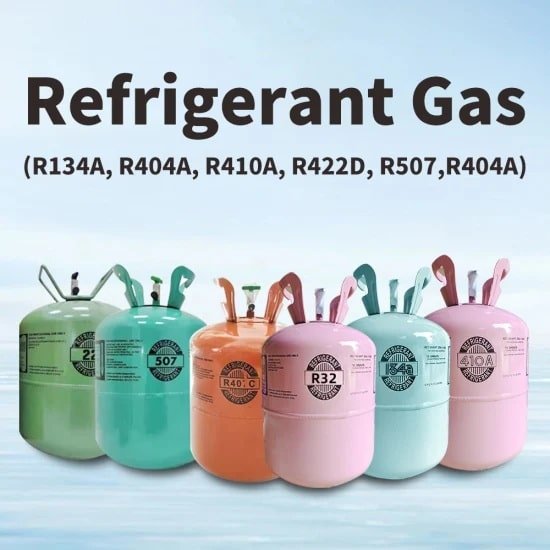
Why Industrial Refrigerant Sourcing Requires Specialist Procurement
Industrial refrigeration systems can represent substantial capital investments, and refrigerant procurement is often part of a longer-term maintenance and supply strategy.
Industrial buyers need to consider more than the initial purchase price.
Important purchasing factors include:
- Exact refrigerant designation
- Product quality and specification
- Regulatory status
- Equipment compatibility
- Availability
- Packaging
- Documentation
- Import requirements
- Transportation requirements
- Total landed cost
- Supplier reliability
- Long-term regulatory outlook
This is especially important because refrigerant regulations are changing in many markets.
For example, the U.S. EPA’s current technology-transition rules establish different GWP limits and compliance dates for various refrigeration and cooling subsectors, including industrial process refrigeration and cold-storage applications.
Main Industrial Refrigerant Categories
Industrial buyers may encounter several broad refrigerant categories.
| Category | Examples | General Commercial Considerations |
|---|---|---|
| HFC | R32, R134a, R404A, R407C, R410A | Established refrigerants with differing regulatory outlooks |
| HFO | R1234yf, R1234ze(E) | Lower-GWP refrigerant technology for selected applications |
| HCFC | R22 | Increasingly restricted in many markets |
| Hydrocarbon | R290, R600a | Very low GWP but subject to application and safety requirements |
| Ammonia | R717 | Important natural refrigerant for certain industrial systems |
| Carbon dioxide | R744 | Used in selected commercial and industrial systems |
| Blends | R404A, R407C, R507 and others | Formulated for particular equipment and applications |
The exact legal status and suitability of each refrigerant should be assessed for the destination market and intended equipment.
Industrial Refrigerant Gas Applications
Industrial refrigerants may be used in several major sectors.
Food Processing
Food manufacturers depend on controlled temperatures for production, processing, storage, and distribution.
Applications can include:
- Process cooling
- Refrigerated storage
- Freezing systems
- Chilled production areas
- Cold-chain facilities
The appropriate refrigerant depends on the refrigeration system and its design requirements.
Cold Storage Warehouses
Cold-storage facilities require dependable refrigeration over long operating periods.
Industrial refrigeration may support:
- Frozen-food warehouses
- Chilled-food distribution
- Meat storage
- Seafood storage
- Dairy distribution
- Pharmaceutical storage
- Logistics centers
The refrigerant selected for a facility should be determined by the system designer and applicable regulatory requirements.
The U.S. EPA’s current technology-transition framework includes specific requirements for cold-storage warehouses, demonstrating why refrigerant procurement needs to consider both the product and the application.
Industrial Manufacturing
Manufacturing facilities may use refrigeration for:
- Process cooling
- Equipment cooling
- Temperature control
- Product manufacturing
- Specialized industrial processes
The required refrigerant can vary substantially depending on the process and equipment.
Chemical and Process Industries
Some industrial processes require continuous temperature management.
Refrigeration can support:
- Chemical processing
- Condensation
- Temperature-controlled production
- Industrial cooling
- Storage
Because these systems can be highly specialized, refrigerant procurement should be based on the exact equipment specification rather than a generic refrigerant category.
Common Industrial Refrigerants
R32
R32 is an HFC refrigerant used in various modern air-conditioning and heat-pump applications.
For wholesale buyers, important considerations include:
- Exact product specification
- Destination-market regulations
- Packaging
- Documentation
- Intended equipment
R134a
R134a has historically been used in various refrigeration and cooling applications.
Its continued commercial relevance varies by market and application because environmental regulations increasingly influence refrigerant selection.
R404A
R404A has historically been widely used in commercial and industrial refrigeration, particularly in low-temperature applications.
However, its high GWP has resulted in significant regulatory attention.
Industrial buyers should carefully check whether R404A remains appropriate for their market and intended application before purchasing new inventory.
R407C
R407C is a blended HFC refrigerant associated with HVAC and refrigeration applications.
Buyers should ensure that:
- The equipment is designed for the refrigerant
- The product specification is correct
- The destination market permits the relevant use
- Required documentation is available
R410A
R410A has historically been important in air-conditioning and heat-pump applications.
As lower-GWP refrigerant technologies become more important, industrial buyers should consider the long-term regulatory position of R410A when planning inventory.
R1234yf
R1234yf is an HFO refrigerant particularly associated with automotive air-conditioning and selected applications.
It is recognized for its very low GWP compared with many older HFC refrigerants.
R1234ze(E)
R1234ze(E) is another HFO refrigerant used in selected cooling and industrial applications.
Its suitability depends on equipment design and the specific application.
R290
R290 is propane used as a natural refrigerant.
It has very low GWP but is subject to specific safety and equipment requirements.
Industrial buyers should ensure that any procurement is aligned with applicable regulations and professionally designed equipment requirements.
R717 Ammonia
R717 is ammonia, a natural refrigerant that has a long history in industrial refrigeration.
It is particularly associated with larger-scale refrigeration applications such as:
- Food processing
- Cold storage
- Industrial refrigeration
- Large-scale cooling
Because ammonia has important safety considerations, industrial refrigeration systems require appropriate professional design, operation, and regulatory oversight.
R744 Carbon Dioxide
R744 is carbon dioxide used as a refrigerant in selected commercial and industrial systems.
CO₂ has attracted considerable attention as a lower-direct-GWP refrigerant option.
Its use depends on system design and application requirements.
How to Choose an Industrial Refrigerant Supplier
Choosing the right supplier is one of the most important steps in industrial refrigerant procurement.
A supplier should be evaluated based on more than price.
1. Product Range
Determine whether the supplier can provide the exact refrigerant required.
Potential products may include:
- R32
- R134a
- R404A
- R407C
- R410A
- R507
- R1234yf
- R1234ze(E)
- Other market-specific refrigerants
A broad portfolio can be valuable for distributors and industrial procurement departments.
2. Product Specification
The supplier should clearly identify the product being offered.
A commercial quotation should specify:
- Refrigerant designation
- Product specification
- Purity requirement
- Packaging
- Net quantity
- Origin
- Available documentation
Avoid purchasing based on generic descriptions such as “industrial cooling gas.”
3. Documentation
Documentation is particularly important for international industrial procurement.
Depending on the transaction, buyers may require:
- Safety Data Sheet
- Certificate of Analysis
- Certificate of Origin
- Commercial invoice
- Packing list
- Product specification
- Applicable regulatory documentation
Requirements vary by product and destination.
Refrigerant Quality and Certificate of Analysis
A Certificate of Analysis can provide batch-related information about the product’s tested characteristics.
For industrial procurement departments, this can support:
- Supplier qualification
- Quality assurance
- Internal purchasing procedures
- Customer requirements
- Traceability
- Batch verification
The exact documentation should be agreed before purchase.
Industrial Refrigerant Packaging
Industrial refrigerants can be supplied in different commercial packaging formats depending on the specific product and market.
Potential formats include:
- Refrigerant cylinders
- Commercial containers
- Larger industrial packaging
- Palletized cylinder shipments
Packaging requirements can depend on:
- Refrigerant type
- Quantity
- Destination
- Transport requirements
- Customer specification
A wholesale quotation should clearly state the agreed packaging format and net quantity.
Bulk Industrial Refrigerant Purchasing
Buying refrigerant in bulk can make sense for:
- Industrial distributors
- Refrigeration companies
- HVAC wholesalers
- Large facility operators
- Equipment manufacturers
- Service organizations
- Commercial refrigeration companies
However, bulk purchasing should be planned around actual demand.
Buyers should evaluate:
Current demand
What products are customers currently requesting?
Regulatory outlook
Could the regulatory status of the refrigerant change?
Inventory requirements
How much inventory can the business reasonably manage?
Supply continuity
Can the supplier support repeat orders?
Total landed cost
What will the final delivered cost be after freight and other charges?
Industrial Refrigerant Gas Price Factors
There is no universal wholesale price for industrial refrigerant gas.
Pricing can be affected by:
- Refrigerant type
- Product availability
- Production costs
- Market demand
- Packaging
- Quantity
- Country of origin
- Freight
- Currency
- Regulatory requirements
- Import duties
- Taxes
- Destination charges
Therefore, buyers should request a quotation based on the exact commercial specification.
Total Landed Cost for Industrial Refrigerants
Industrial buyers should evaluate:
Total landed cost = Product + Packaging + Freight + Insurance where applicable + Duties + Taxes + Destination costs + Other applicable charges
This is more useful than comparing supplier prices alone.
A supplier with a slightly higher product price may still provide a lower overall landed cost if freight, packaging, documentation, and commercial terms are more favorable.
Industrial Refrigerant Import Requirements
International refrigerant trade can be subject to environmental and customs requirements.
Depending on the destination, importers may need to consider:
- Import permits
- Environmental regulations
- HFC allowances or quotas
- Customs classification
- Product documentation
- Packaging requirements
- Transportation regulations
- Reporting obligations
For example, U.S. EPA rules restrict the purchase of many refrigerants to qualifying certified purchasers, while wholesalers have specific recordkeeping and sales responsibilities.
For U.S. buyers importing bulk HFCs, EPA’s allowance program is another important consideration. EPA’s 2026 allowance framework controls production and consumption of bulk HFCs under the AIM Act.
These examples demonstrate why industrial refrigerant procurement should always be assessed on a destination-specific basis.
Refrigerant Regulations and Long-Term Procurement Planning
Industrial buyers should not consider refrigerant sourcing only as a short-term purchasing exercise.
Regulatory changes can affect:
- Product availability
- Import eligibility
- Equipment design
- Inventory value
- Customer demand
- Replacement strategies
- Long-term supply
EPA’s current technology-transition requirements illustrate this trend. Different subsectors have different GWP limits and compliance dates, including industrial process refrigeration and cold-storage applications.
A professional buyer should therefore consider both:
“What can we purchase today?”
and
“What refrigerant technologies will remain commercially practical for our market?”
Industrial Refrigerant Supplier Qualification Checklist
Before selecting a supplier, evaluate the following.
| Supplier Factor | Questions to Ask |
|---|---|
| Product range | Can the supplier provide the required refrigerant? |
| Specification | Is the exact product specification clearly stated? |
| Quality | Is supporting documentation available? |
| Origin | Is declared origin provided? |
| Packaging | Is the required commercial packaging available? |
| MOQ | What is the minimum order quantity? |
| Supply capacity | Can repeat orders be supported? |
| Documentation | Are SDS, COA and other applicable documents available? |
| Logistics | Can the supplier support the required delivery structure? |
| Compliance | Can product information be provided for regulatory review? |
| Pricing | Is the quotation commercially competitive? |
| Lead time | Is the proposed supply schedule realistic? |
| Communication | Are specifications and terms clearly documented? |
Industrial Refrigerant Gas for Distributors
Wholesale distributors often need several refrigerant products because their customers operate different types of equipment.
A distributor may potentially require:
- R32
- R134a
- R407C
- R410A
- R1234yf
- Other market-specific products
The ideal product portfolio should be based on actual local demand and regulations.
Distributors should avoid accumulating large quantities of products whose future market access is uncertain.
Industrial Refrigerant Gas for Food Processing
Food-processing companies can have significant refrigeration requirements.
Potential applications include:
- Processing
- Chilling
- Freezing
- Cold storage
- Distribution
- Temperature-controlled production
Industrial buyers should coordinate refrigerant procurement with equipment specifications and maintenance planning.
For large facilities, continuity of supply may be more important than achieving the lowest possible initial price.
Industrial Refrigerant Gas for Cold Storage
Cold-storage facilities can require refrigeration systems operating continuously over extended periods.
Procurement teams should consider:
- Existing refrigerant requirements
- Equipment age
- Future equipment plans
- Regulatory changes
- Supplier availability
- Emergency procurement needs
- Long-term inventory planning
The regulatory direction of the destination market should be considered before committing to large inventory volumes.
Industrial Refrigerant Gas for HVAC Systems
Large HVAC installations may use refrigerants such as R32, R410A, R407C, or other market-specific alternatives.
However, refrigerant selection must follow the equipment manufacturer’s specification and applicable regulations.
Wholesale buyers should avoid treating refrigerants as generic commodities that can be substituted solely on the basis of price.
Industrial Refrigerant Logistics
Industrial refrigerant shipments require logistics planning appropriate to the product and applicable transportation rules.
Potential commercial transportation methods include:
- Sea freight
- Road freight
- Air freight where permitted
- Multimodal logistics
The exact logistics solution depends on:
- Product
- Packaging
- Quantity
- Destination
- Carrier requirements
- Regulatory classification
- Delivery schedule
Industrial buyers should use qualified logistics providers for shipment-specific requirements.
Incoterms for Wholesale Refrigerant Purchasing
International industrial buyers may encounter:
- EXW
- FCA
- FOB
- CFR
- CIF
- DAP
- DDP where commercially and legally appropriate
The quotation should clearly identify the named place and which party is responsible for freight, insurance where applicable, export procedures, import formalities, duties, and other costs.
For regulated products, compliance responsibilities should also be clarified separately from the commercial Incoterm.
How to Request an Industrial Refrigerant Quotation
A professional request should include:
Product: Exact refrigerant designation
Quantity: Required kg, cylinders, pallets, or other agreed unit
Packaging: Required cylinder or container format
Destination: Country and port
Application: Industrial refrigeration / HVAC / cold storage / manufacturing / other
Incoterm: FOB / CIF / CFR / FCA / other
Documentation: Required certificates and documents
Delivery schedule: Target shipment or arrival timeframe
This information allows the supplier to prepare a more accurate commercial offer.
Industrial Refrigerant Procurement Specification Table
| Specification | Buyer Requirement |
|---|---|
| Product | Industrial Refrigerant Gas |
| Refrigerant | R32 / R134a / R404A / R407C / R410A / R507 / R1234yf / Other |
| Category | HFC / HFO / HCFC / Hydrocarbon / Natural |
| Application | Industrial Refrigeration / HVAC / Cold Storage / Process Cooling |
| Purity | According to agreed specification |
| Packaging | Commercial Cylinder / Approved Packaging |
| Net Weight | According to selected packaging |
| Origin | Subject to availability |
| Documentation | SDS / COA / COO / Invoice / Packing List, as applicable |
| MOQ | Subject to product and destination |
| Supply | Wholesale / Bulk / B2B |
| Buyers | Importers / Distributors / Industrial Companies / Wholesalers |
| Shipping | Sea / Road / Air where permitted |
| Incoterms | FOB / CIF / CFR / FCA / EXW / Other agreed terms |
| Destination | International, subject to regulations |
| Compliance | Destination-market requirements apply |
Common Industrial Refrigerant Sourcing Mistakes
Mistake 1: Choosing the Cheapest Supplier
Price is only one component of total procurement cost.
Mistake 2: Ignoring Regulations
A refrigerant’s availability does not guarantee that it can legally be imported or sold in every market.
Mistake 3: Buying Without Exact Specifications
Generic product descriptions create unnecessary commercial and documentation risk.
Mistake 4: Ignoring Future Regulation
Long-term inventory planning should account for regulatory changes.
Mistake 5: Not Checking Documentation
Industrial buyers should agree documentation requirements before shipment.
Mistake 6: Treating All Refrigerants as Interchangeable
Equipment compatibility must be established by the appropriate technical professionals.
Mistake 7: Ignoring Supply Continuity
For industrial facilities, supplier reliability can be more valuable than a small difference in purchase price.
How to Build a Long-Term Industrial Refrigerant Supply Strategy
A strong procurement strategy can be divided into five stages.
Stage 1: Analyze Demand
Identify which refrigerants are currently required across your customer base or facilities.
Stage 2: Review Regulations
Check the current and expected regulatory position in your target markets.
Stage 3: Qualify Suppliers
Evaluate product specifications, documentation, supply capacity, commercial terms, and communication.
Stage 4: Compare Landed Cost
Evaluate the complete commercial cost rather than only the quoted product price.
Stage 5: Establish Repeat Supply
For recurring industrial requirements, discuss repeat-order structures and realistic supply schedules with qualified suppliers.
Why Choose J.E Trading AB for Wholesale Refrigerant Sourcing?
J.E Trading AB works with international B2B buyers seeking wholesale sourcing solutions across global markets.
For industrial refrigerant inquiries, buyers can specify:
- Refrigerant type
- Quantity
- Packaging
- Destination
- Application
- Incoterm
- Documentation requirements
- Delivery schedule
This allows the commercial requirement to be evaluated according to the actual product and destination rather than using a generic refrigerant quotation.
Product availability, export eligibility, documentation, and logistics remain subject to the specific refrigerant and destination-market requirements.
Frequently Asked Questions About Industrial Refrigerant Gas
What is industrial refrigerant gas?
Industrial refrigerant gas refers to refrigerants used in industrial refrigeration, process cooling, cold storage, manufacturing, HVAC, and other large-scale temperature-control applications.
What are common industrial refrigerants?
Depending on the application and market, industrial refrigeration can involve products such as R32, R134a, R404A, R407C, R410A, R1234ze(E), R290, R717, R744 and other refrigerants.
What is the best industrial refrigerant?
There is no single best refrigerant for every industrial system. The appropriate product depends on equipment design, application, environmental requirements, regulatory status, and system specifications.
Can I buy industrial refrigerant gas wholesale?
Wholesale refrigerant sales are subject to applicable laws and market requirements. In the United States, for example, EPA sales restrictions apply to many refrigerants and qualifying purchasers.
What documents should I request from an industrial refrigerant supplier?
Depending on the transaction, buyers may request SDS, COA, Certificate of Origin, commercial invoice, packing list, product specification, and other applicable regulatory or transport documents.
What affects industrial refrigerant prices?
Refrigerant type, market availability, quantity, packaging, origin, freight, regulatory costs, duties, taxes, and destination charges can all influence the final price.
Are industrial refrigerants regulated?
Yes. Refrigerants can be subject to environmental, sales, transportation, import, and equipment-related regulations. Requirements vary by country and refrigerant.
Can industrial refrigerant be imported internationally?
International import may be possible depending on the refrigerant, destination, quantity, packaging, applicable environmental rules, customs requirements, and transport regulations.
Why is low-GWP refrigerant becoming more important?
Many markets are transitioning toward refrigerants with lower climate impact. Regulatory programs can establish GWP limits or other restrictions for specific equipment categories.
What information should I provide when requesting a wholesale quotation?
Provide the exact refrigerant, quantity, packaging, destination country and port, application, preferred Incoterm, documentation requirements, and target delivery schedule.
Conclusion: Choosing the Right Industrial Refrigerant Supplier
Industrial refrigerant procurement requires a strategic approach.
The best wholesale supplier is not necessarily the one offering the lowest price. Industrial buyers should evaluate product specification, quality, documentation, regulatory status, packaging, supply capacity, logistics, landed cost, and long-term market availability.
As global refrigerant regulations evolve, companies should also consider how current purchasing decisions could affect future inventory and equipment requirements.
For industrial buyers, a strong sourcing process is:
Identify the application → specify the refrigerant → check regulations → qualify the supplier → verify documentation → compare landed cost → establish compliant logistics → plan long-term supply.
J.E Trading AB can support B2B sourcing inquiries for wholesale refrigerant products, subject to product availability, destination-market requirements, and applicable regulations.
For a quotation request, provide the exact refrigerant, quantity, packaging, destination country/port, intended application, and preferred Incoterm.