

Delivery Options for Bulk Refrigerant: A Complete Guide for International Buyers
Bulk refrigerant delivery requires careful planning because refrigerants are commonly transported as regulated, pressurized products and may be subject to environmental, customs, dangerous-goods, and import/export requirements. For international buyers, selecting the right delivery method is therefore not simply a question of choosing the fastest or cheapest freight option.
The appropriate logistics solution depends on the refrigerant type, cylinder size, shipment quantity, destination country, transport regulations, required documentation, delivery timeline, and intended commercial application.
J.E Trading AB supports professional B2B buyers seeking international sourcing and delivery solutions for refrigerant products, subject to product availability and applicable regulations. This guide explains the major delivery options for bulk refrigerant, the factors buyers should consider, and how to prepare a wholesale refrigerant shipment for international transportation.
What Is Bulk Refrigerant Delivery?
Bulk refrigerant delivery refers to the commercial transportation of refrigerant products in quantities larger than ordinary consumer or small-service purchases.
Depending on the product and market, commercial orders can involve:
- Multiple refrigerant cylinders
- Palletized cylinders
- Full truck shipments
- Containerized cargo
- Larger industrial refrigerant formats
- Specialized commercial logistics
The exact transportation format depends on the physical and regulatory characteristics of the refrigerant.
Some refrigerants may be classified as dangerous goods for transportation, while specific products can have additional environmental or import controls.
Consequently, every shipment should be evaluated according to the exact refrigerant designation rather than treated as generic “gas cargo.”
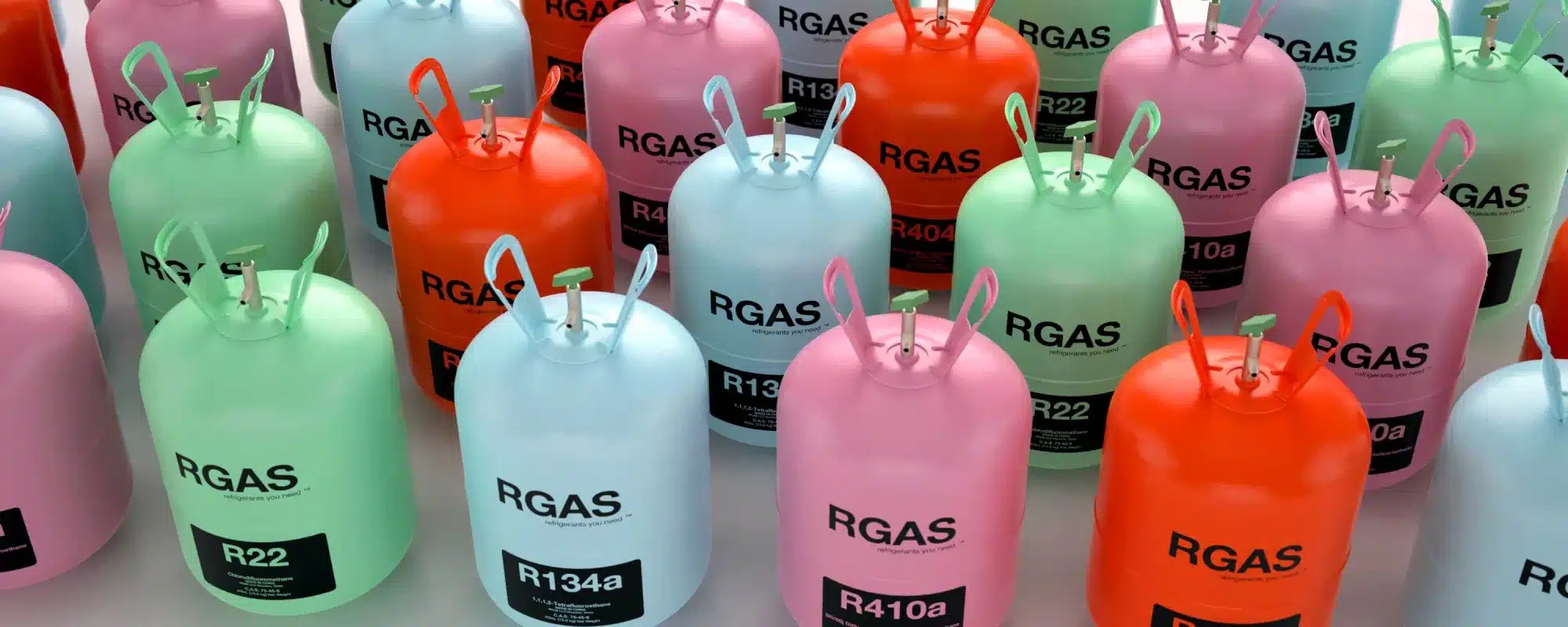
Why Refrigerant Delivery Requires Special Planning
Refrigerants can be pressurized, liquefied gases and may have specific classifications relating to:
- Pressure
- Flammability
- Toxicity
- Environmental impact
- Transportation
- Cylinder specifications
- Storage requirements
For example, R32, R290, and R600a have different safety characteristics from non-flammable refrigerants.
Likewise, legacy refrigerants such as R22 can have additional environmental and regulatory restrictions.
This means that the delivery method must be selected according to the specific product.
A professional supplier should therefore establish the following information before arranging shipment:
- Exact refrigerant designation
- Quantity
- Cylinder format
- Net weight
- Destination
- Transport mode
- Regulatory requirements
- Required documentation
- Delivery terms
- Import authorization where applicable
Main Delivery Options for Bulk Refrigerant
International buyers generally have several potential logistics options.
The most common include:
- Sea freight
- Full-container-load shipping
- Less-than-container-load shipping
- Road freight
- Air freight
- Multimodal transportation
- Regional warehouse delivery
- Direct commercial delivery
The best option depends on the shipment profile.
1. Sea Freight for Bulk Refrigerant
For larger international orders, sea freight can be an important transportation option.
Sea freight is particularly relevant when buyers are purchasing commercial quantities for:
- National distribution
- Regional distribution
- HVAC wholesalers
- Refrigeration distributors
- Industrial customers
- Large commercial inventories
Depending on the shipment, refrigerant cylinders may be arranged on pallets or using another approved cargo configuration.
Advantages of Sea Freight
Sea transportation can offer:
- Cost efficiency for larger shipments
- International port coverage
- Suitability for longer-distance trade
- Scalability for commercial orders
- Integration with container logistics
Considerations
Sea freight can involve longer transit times than air transportation.
Buyers must also consider:
- Dangerous-goods classification
- Carrier acceptance
- Port requirements
- Documentation
- Customs procedures
- Destination import requirements
- Cylinder compliance
The exact shipping configuration should be confirmed before booking.
2. Full Container Load for Bulk Refrigerant
Full Container Load (FCL) shipping may be considered when the order quantity is sufficiently large to justify dedicated container capacity.
FCL can be attractive for professional buyers purchasing large volumes for distribution.
Potential advantages include:
- Dedicated container space
- Simplified cargo consolidation
- Greater control over shipment configuration
- Efficient transportation for large orders
- Reduced dependency on other cargo
However, refrigerants cannot simply be loaded into a container without consideration of applicable dangerous-goods regulations.
The shipping line, freight forwarder, and relevant authorities may require specific documentation, packaging, labeling, and cargo arrangements.
3. Less-than-Container Load for Refrigerant
Less-than-Container Load (LCL) may be considered when the buyer does not require a full container.
However, because refrigerants can be regulated cargo, LCL availability depends on the specific product and carrier.
LCL may involve:
- Cargo consolidation
- Specialized freight handling
- Additional documentation
- Longer handling times
- Additional loading/unloading points
The suitability of LCL should therefore be confirmed with a qualified freight provider.
For certain refrigerants, specialized dangerous-goods logistics may be necessary.
4. Road Freight for Bulk Refrigerant
Road freight can be particularly useful for regional deliveries.
It may be used for:
- Domestic distribution
- Cross-border European shipments
- Regional warehouse replenishment
- Distributor deliveries
- Commercial HVAC supply
Road transport can provide flexible delivery schedules and direct transportation between warehouses.
However, road shipments may be subject to dangerous-goods regulations and driver, vehicle, packaging, and documentation requirements.
For cross-border transportation, customs and border procedures may also apply.
5. Air Freight for Refrigerant
Air freight can offer faster international transportation but is significantly more restrictive for many pressurized or dangerous-goods products.
Not every refrigerant can be shipped by air under the same conditions.
Air transportation can involve requirements relating to:
- Dangerous-goods classification
- Airline acceptance
- Packaging
- Quantity limitations
- Documentation
- Labeling
- Aircraft restrictions
- Destination-country requirements
For this reason, air freight should generally be evaluated only after confirming that the specific refrigerant and packaging are accepted for the proposed route.
Air freight may be considered for urgent commercial shipments where legally permitted.
6. Multimodal Refrigerant Delivery
International shipments frequently involve more than one transportation method.
For example:
Supplier warehouse → Truck → Export port → Ocean freight → Destination port → Truck → Buyer warehouse
This is known as multimodal transportation.
It can combine:
- Road
- Sea
- Rail
- Air
Multimodal logistics can be useful when the supplier and buyer are located in different regions.
However, each stage must comply with the applicable transportation requirements.
Refrigerant Delivery by Quantity
The appropriate delivery method often depends on order volume.
| Order Profile | Potential Delivery Option |
|---|---|
| Small commercial order | Road / approved parcel or freight service |
| Multiple cylinders | Palletized freight |
| Regional wholesale order | Road freight |
| Medium international order | LCL or specialized freight |
| Large international order | FCL / specialized sea freight |
| Urgent shipment | Air freight where permitted |
| Industrial-scale order | Specialized logistics / bulk transportation |
This table is a general logistics guide. The actual method must be confirmed according to the specific refrigerant and applicable transportation rules.
Refrigerant Cylinder Packaging
Cylinder packaging is one of the most important parts of commercial refrigerant transportation.
The cylinder must be appropriate for:
- The specific refrigerant
- Product pressure
- Filling requirements
- Transportation regulations
- Destination market
- Applicable cylinder standards
Commercial buyers should verify that the supplied cylinders are properly identified and packaged.
Relevant information can include:
- Refrigerant designation
- Net content
- Cylinder identification
- Product warnings
- Batch information
- Manufacturer information
- Required transportation markings
The exact packaging requirements vary by product.
Palletized Refrigerant Delivery
Wholesale refrigerant orders can often be organized into palletized shipments where permitted.
Palletization may improve:
- Warehouse handling
- Cargo organization
- Loading efficiency
- Inventory management
- Distribution
However, pallet configuration depends on cylinder dimensions, weight, regulatory requirements, and carrier restrictions.
Buyers should request the confirmed pallet configuration before planning container utilization.
Refrigerant Transportation Documentation
International refrigerant shipments can require several documents.
Depending on the product and destination, documentation may include:
- Commercial invoice
- Packing list
- Bill of lading
- Certificate of origin
- Safety Data Sheet
- Product specification
- Certificate of Analysis where applicable
- Dangerous-goods documentation
- Customs documents
- Import permits
- Environmental documentation
Not every shipment requires every document.
The required document package should be determined based on the exact product, origin, destination, transport mode, and applicable law.
Dangerous-Goods Considerations
Many refrigerants are transported under dangerous-goods rules.
The classification depends on the exact product.
Important transportation considerations may include:
- UN classification
- Proper shipping name
- Hazard classification
- Packaging requirements
- Labeling
- Documentation
- Carrier acceptance
- Quantity limitations
- Vehicle or vessel requirements
Professional buyers should use qualified freight forwarders experienced in regulated refrigerant shipments.
A general freight service may not be appropriate for every refrigerant.
Refrigerant Import Requirements
Before placing an international order, the buyer should determine whether the selected refrigerant is legally permitted for import.
Depending on the country, requirements can involve:
- Import permits
- Environmental quotas
- Product registration
- Customs declarations
- Ozone-related controls
- F-gas controls
- Licensing
- Certification
- Restricted-substance requirements
The rules can differ considerably between countries.
For example, the regulatory treatment of an HFC refrigerant may differ from that of an HFO or natural refrigerant.
Destination Country Matters
A refrigerant product available in one country cannot automatically be assumed to be available for import into another.
The destination country determines many aspects of the transaction.
Before shipment, buyers should verify:
Product Authorization
Is the specific refrigerant permitted?
Import Authorization
Does the importer require a permit or license?
Environmental Rules
Are there quotas, phase-down measures, or restrictions?
Labeling
Does the product require local-language labeling?
Customs
What tariff and customs classification applies?
Transportation
What requirements apply after arrival?
End Use
Is the intended application permitted?
These checks should be completed before the shipment is dispatched.
Refrigerant Delivery to Europe
European buyers need to consider applicable EU and national requirements governing fluorinated greenhouse gases and other regulated refrigerants.
Depending on the product and application, buyers may need to consider:
- F-gas rules
- Import controls
- Quota requirements
- Certification
- Equipment restrictions
- Recordkeeping
- Recovery requirements
- Product labeling
The European regulatory environment continues to evolve.
Therefore, importers should confirm the latest applicable requirements at the time of purchase.
Refrigerant Delivery to the Middle East
The Middle East is a major HVAC market, particularly for air-conditioning products.
Commercial refrigerant demand can include products for:
- Building HVAC
- Commercial refrigeration
- Industrial refrigeration
- Air-conditioning service
- Heat pumps
- Cold storage
However, regulations vary by country.
Importers should verify the specific requirements of their destination before ordering.
Refrigerant Delivery to Africa
African markets have growing requirements for refrigeration and air-conditioning products.
Commercial applications include:
- Cold storage
- Food distribution
- Supermarkets
- Hospitality
- Industrial refrigeration
- HVAC
- Transport refrigeration
Import requirements differ by country.
Buyers should verify environmental controls, customs requirements, product approvals, and transportation regulations before shipment.
Refrigerant Delivery to Asia
Asia includes some of the world’s largest HVAC and refrigeration markets.
Commercial buyers may source refrigerants for:
- Air conditioning
- Refrigeration
- Heat pumps
- Industrial cooling
- Automotive applications
However, country-specific regulations should always be checked.
Refrigerant Delivery to North America
North American refrigerant markets are also undergoing significant regulatory changes.
Buyers may need to consider federal, state, provincial, and local requirements depending on the destination.
Requirements can differ based on:
- Refrigerant type
- Equipment type
- New installation
- Existing equipment
- Servicing
- Import
- Export
Professional buyers should obtain current regulatory advice before importing regulated refrigerants.
Choosing Between Sea and Air Freight
One of the most common questions from international buyers is whether sea or air freight is better.
| Factor | Sea Freight | Air Freight |
|---|---|---|
| Cost for Large Volumes | Generally more economical | Generally higher |
| Transit Speed | Slower | Faster |
| Large Commercial Orders | Often suitable | More restrictive |
| Dangerous Goods | Subject to maritime rules | Subject to strict air rules |
| Container Capacity | High | Limited |
| Urgent Delivery | Less suitable | Potentially suitable where permitted |
| Documentation | Required | Often extensive |
| Carrier Acceptance | Product dependent | Product dependent |
The lowest-cost option is not necessarily the best option.
For bulk refrigerant, regulatory acceptance and safe transportation should come before price optimization.
How to Reduce Refrigerant Delivery Costs
Wholesale buyers can often improve logistics efficiency through careful planning.
Consolidate Orders
Combining orders may reduce the cost per unit.
Optimize Pallet Configuration
Efficient pallet planning can improve cargo utilization.
Plan Ahead
Avoiding urgent shipments can reduce transportation costs.
Select Appropriate Incoterms
The selected Incoterm determines responsibilities for transportation, insurance, customs, and delivery.
Compare Freight Providers
Use freight forwarders experienced in refrigerant and dangerous-goods transportation.
Confirm Documentation Early
Missing documents can cause delays and additional charges.
Incoterms for Refrigerant Shipments
International buyers may consider Incoterms such as:
- EXW
- FCA
- FOB
- CFR
- CIF
- DAP
- DDP where legally and commercially appropriate
The appropriate Incoterm depends on:
- Buyer capabilities
- Supplier location
- Destination
- Customs requirements
- Freight arrangements
- Insurance
- Import responsibilities
For regulated products, buyers should clearly understand who is responsible for compliance and documentation under the chosen Incoterm.
Refrigerant Delivery Lead Time
Lead time can include several stages:
- Product confirmation
- Stock verification
- Documentation preparation
- Regulatory checks
- Packaging
- Freight booking
- Export procedures
- Transportation
- Customs clearance
- Final delivery
Consequently, the quoted transportation time is not always the same as the total order lead time.
Buyers should ask for:
- Product preparation time
- Estimated transit time
- Customs expectations
- Delivery window
- Documentation lead time
How to Prepare a Wholesale Refrigerant Order
A professional purchase inquiry should contain sufficient information for the supplier and logistics provider.
Recommended Information
Product: Exact refrigerant designation
Quantity: Number of cylinders or total net weight
Cylinder: Required format
Destination: Country and city/port
Application: Commercial HVAC/refrigeration use
Documentation: Required documents
Shipping: Preferred transportation mode
Incoterm: Preferred commercial term
Delivery Date: Required timeframe
This information helps reduce delays and unnecessary quotation revisions.
Refrigerant Delivery Specification Form
| Requirement | Buyer Information |
|---|---|
| Refrigerant | Exact R-designation |
| Product Family | HFC / HFO / HCFC / Natural / Blend |
| Quantity | Required net weight |
| Cylinders | Number required |
| Cylinder Size | Required net fill |
| Packaging | Cylinder / pallet / other approved format |
| Origin | Required origin, if applicable |
| Destination Country | Buyer to specify |
| Destination Port | Buyer to specify |
| Final Delivery Location | Buyer to specify |
| Shipping Method | Sea / Road / Air where permitted |
| Incoterm | EXW / FCA / FOB / CIF / DAP etc. |
| Documentation | Buyer requirement |
| Import Permit | Buyer to confirm |
| Regulatory Status | Must be verified |
| Required Delivery Date | Buyer requirement |
Common Refrigerant Delivery Mistakes
Ordering Without Checking Regulations
The buyer should verify that the product can legally be imported.
Selecting the Wrong Refrigerant
The product designation must match the equipment requirement.
Ignoring Dangerous-Goods Rules
Not all freight companies accept refrigerants under ordinary cargo procedures.
Waiting Until Shipment to Prepare Documents
Regulatory and customs documentation should be planned early.
Focusing Only on Product Price
The landed cost can include:
- Freight
- Insurance
- Customs
- Duties
- Taxes
- Port charges
- Documentation
- Handling
Assuming All Refrigerants Have the Same Shipping Requirements
Different refrigerants have different classifications and transportation requirements.
Landed Cost of Bulk Refrigerant
The actual cost of imported refrigerant can be significantly different from the supplier’s product price.
A buyer should consider:
Product Cost + Packaging + Inland Freight + Export Charges + Ocean/Air Freight + Insurance + Port Charges + Customs + Duties + Taxes + Local Delivery
This is the buyer’s approximate landed-cost structure.
A professional importer should evaluate the entire supply chain rather than comparing only the quoted price per cylinder.
Working With a Refrigerant Freight Forwarder
For international bulk refrigerant shipments, an experienced freight forwarder can help coordinate:
- Dangerous-goods classification
- Carrier selection
- Export documentation
- Shipping bookings
- Customs procedures
- Cargo handling
- Port processes
- Destination delivery
For regulated products, specialist logistics experience can significantly reduce avoidable delays.
Why Choose J.E Trading AB?
J.E Trading AB provides professional B2B sourcing and international trading services.
For refrigerant buyers, our commercial approach focuses on:
Product Specification
Identifying the exact refrigerant required.
Wholesale Quantities
Supporting commercial purchasing requirements subject to availability.
International Trade
Supporting buyers involved in cross-border procurement.
Logistics Coordination
Discussing suitable delivery arrangements according to the shipment and destination.
Documentation
Working with buyers to establish required commercial documentation.
Market Awareness
Recognizing that refrigerant regulations vary between countries.
Delivery Options for Different Refrigerant Types
Different refrigerants can have different transportation requirements.
Examples include:
- R32 – regulated pressurized refrigerant with specific safety and transport considerations
- R134a – HFC refrigerant subject to market-specific environmental controls
- R404A – high-GWP refrigerant with significant restrictions in various markets
- R410A – pressurized HFC blend with market-specific restrictions
- R1234yf – lower-GWP HFO refrigerant with specific transport and application considerations
- R290 – flammable natural refrigerant
- R600a – flammable hydrocarbon refrigerant
- R744 – carbon dioxide refrigerant with specialized pressure considerations
- R717 – ammonia refrigerant requiring specialized industrial handling
Therefore, the delivery solution must be selected after identifying the exact refrigerant.
Future Trends in Refrigerant Logistics
The refrigerant industry is moving toward products with lower global-warming potential and technologies designed around environmental regulations.
This transition is likely to influence logistics in several ways:
- Increasing demand for lower-GWP refrigerants
- Greater regulatory documentation
- More market-specific product controls
- Increased demand for specialized logistics
- Growth of natural refrigerants
- Greater emphasis on product traceability
- More sophisticated refrigerant recovery and recycling systems
International buyers should therefore consider long-term regulatory trends when establishing procurement programs.
Frequently Asked Questions About Bulk Refrigerant Delivery
What is the best delivery method for bulk refrigerant?
For large international orders, sea freight can often be commercially attractive, while road freight may be suitable for regional shipments. Air freight may be considered for urgent shipments where the specific refrigerant is legally accepted.
Can refrigerant be shipped by sea?
Many refrigerants can be transported by sea subject to applicable dangerous-goods, packaging, documentation, and carrier requirements.
Can refrigerant be shipped by air?
Some refrigerants may be eligible for air transportation under applicable rules, but air freight is more restrictive. Carrier acceptance and packaging requirements must be confirmed before booking.
Can refrigerant be transported by road?
Yes, where permitted, but applicable dangerous-goods transportation requirements may apply.
Can I import refrigerant into any country?
No. Refrigerants may be subject to import restrictions, environmental controls, quotas, licensing, or other requirements.
What documents are needed for refrigerant shipping?
Requirements vary, but documentation can include commercial invoices, packing lists, bills of lading, safety documentation, dangerous-goods documentation, certificates of origin, and import/environmental permits where applicable.
How should bulk refrigerant be packaged?
Packaging must comply with the requirements applicable to the specific refrigerant and transportation mode. Approved cylinders and appropriate labeling are essential.
Is pallet shipping possible?
Palletized shipping may be possible depending on the cylinder type, refrigerant, carrier, and applicable regulations.
How do I request a bulk refrigerant quotation?
Provide the exact refrigerant designation, quantity, cylinder size, destination country, destination port, intended application, documentation requirements, and preferred Incoterm.
Conclusion
Choosing the right delivery option for bulk refrigerant requires a combination of logistics planning, regulatory compliance, product knowledge, and commercial coordination.
Sea freight may be suitable for larger international orders, while road freight can provide efficient regional distribution. LCL can be considered for smaller commercial shipments where accepted, and air freight may provide faster transportation for eligible products.
However, refrigerant logistics should never be treated like ordinary general cargo.
The exact refrigerant designation, cylinder format, quantity, destination, transportation mode, environmental regulations, dangerous-goods classification, and import requirements must all be evaluated before shipment.
For international buyers, effective planning can help reduce delays, unexpected costs, and compliance problems.
J.E Trading AB supports professional B2B buyers seeking wholesale refrigerant gas and international delivery solutions, subject to product availability, destination-market requirements, and applicable laws.
Request a Bulk Refrigerant Delivery Quote
When contacting J.E Trading AB, provide:
- Exact refrigerant
- Required quantity
- Cylinder size
- Destination country
- Destination port
- Intended application
- Preferred delivery method
- Required documents
- Preferred Incoterm
- Required delivery timeframe
J.E Trading AB can then review the commercial requirements and discuss available supply and logistics options for the requested market.
J.E Trading AB – Professional Wholesale Sourcing and International Product Supply.