

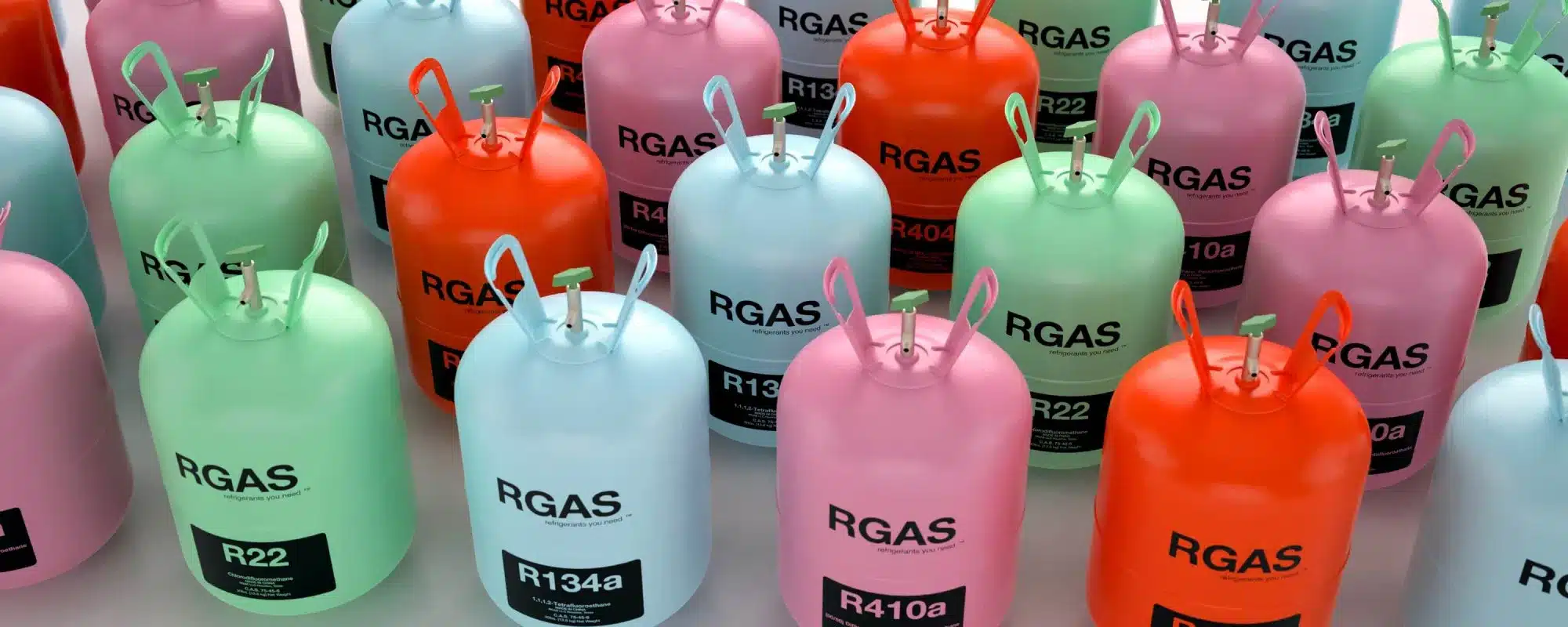
Wholesale Refrigerant Gas for Sale | Global Refrigerant Supplier
Wholesale Refrigerant Gas for International Buyers
J.E Trading AB provides professional international sourcing and wholesale trading services for commercial buyers seeking refrigerant products for legitimate HVAC, refrigeration, air-conditioning, heat-pump, industrial-cooling, and related applications.
The global refrigerant market is changing as countries introduce regulations to reduce refrigerants’ environmental impact and phase down or restrict substances with high global-warming potential. For this reason, professional wholesale refrigerant gas purchasing requires more than comparing price and cylinder size. Buyers must consider refrigerant type, intended application, regulatory status, country of destination, packaging, labeling, safety documentation, transportation requirements, and applicable environmental rules.
J.E Trading AB works with commercial buyers who require clearly specified refrigerant products for legitimate business purposes. Depending on current availability and destination-market requirements, product categories can include selected HFC, HFO, HCFC, HFO/HFC blend, and lower-GWP refrigerant products, subject to applicable legislation.
Because refrigerant regulations differ between jurisdictions, the availability of an individual refrigerant does not mean that it can legally be imported, exported, sold, installed, or used in every country.
For international transactions, the exact product, formulation, cylinder type, origin, documentation, and destination-market compliance should therefore be confirmed before an order is finalized.
What Is Refrigerant Gas?
Refrigerants are substances used in refrigeration and heat-transfer systems to move heat from one location to another.
They are used in equipment such as:
- Air-conditioning systems
- Commercial refrigeration
- Industrial refrigeration
- Cold-storage facilities
- Heat pumps
- Chillers
- Transport refrigeration
- Supermarket refrigeration
- Food-processing refrigeration
- Industrial cooling systems
- Specialized temperature-control equipment
Different refrigerants have different thermodynamic properties, pressure characteristics, flammability classifications, toxicity classifications, environmental profiles, and equipment requirements.
For this reason, refrigerants are not interchangeable commodities.
A system designed for one refrigerant cannot automatically be filled with another refrigerant simply because both products are marketed for cooling applications.
Professional buyers should always identify the refrigerant specified by the original equipment manufacturer and applicable technical regulations.
Wholesale Refrigerant Gas Supplier for Global Markets
The phrase wholesale refrigerant gas supplier covers a broad category of products.
The international market includes legacy refrigerants, transitional products, newer lower-GWP refrigerants, and refrigerant blends developed for specific applications.
J.E Trading AB can discuss commercially available refrigerant categories with qualified buyers while taking account of:
- Destination country
- Intended application
- Refrigerant designation
- Regulatory status
- Required cylinder size
- Packaging requirements
- Documentation
- Import restrictions
- Environmental requirements
- Transportation regulations
The correct product should always be selected based on the equipment specification and local regulatory framework.
Major Types of Refrigerant Gas
The refrigerant market can broadly be divided into several chemical families.
1. HFC Refrigerants
Hydrofluorocarbons (HFCs) have been widely used in refrigeration and air-conditioning applications.
Examples include:
- R32
- R134a
- R404A
- R407C
- R410A
- R507A
However, these products do not all have the same environmental profile or regulatory status.
Some HFC refrigerants have relatively high global-warming potential and are subject to phase-down or restrictions in various markets.
Their availability and permitted uses therefore depend on the jurisdiction.
R32 Refrigerant
R32 is a refrigerant used in various air-conditioning and heat-pump applications.
It has become an important refrigerant in markets transitioning toward lower-GWP alternatives.
R32 is classified as mildly flammable, meaning equipment design, installation, storage, transportation, and servicing must follow applicable safety requirements.
Commercial buyers searching for R32 refrigerant wholesale should specify:
- Refrigerant designation
- Required purity/specification
- Cylinder format
- Quantity
- Destination market
- Application
- Required documentation
The legal status and permitted applications should be checked in the destination jurisdiction.
R134a Refrigerant
R134a has historically been used in automotive air conditioning, refrigeration equipment, chillers, and other applications.
It is an HFC refrigerant with a relatively high global-warming potential compared with newer alternatives.
Consequently, restrictions and phase-down measures apply in various jurisdictions.
Buyers searching for R134a refrigerant wholesale should not assume that unrestricted international sale is possible.
The appropriate commercial approach is to confirm the destination-country rules and intended application before sourcing.
R404A Refrigerant
R404A is a refrigerant blend historically associated with commercial and industrial refrigeration.
It has a high global-warming potential and has consequently faced significant regulatory pressure in many markets.
New installations and certain uses may be restricted depending on the jurisdiction.
For buyers searching for R404A refrigerant wholesale, regulatory verification is especially important.
The product may remain relevant for specific existing equipment or markets where legally permitted, but its commercial availability and permitted applications must be confirmed.
R407C Refrigerant
R407C is an HFC blend used in various air-conditioning and refrigeration applications.
It has been used as an alternative to certain older refrigerants in particular equipment categories.
As with other HFC products, its regulatory status varies between countries.
Commercial buyers should verify:
- Equipment compatibility
- Local restrictions
- Import requirements
- Cylinder specifications
- Product documentation
- Intended use
R410A Refrigerant
R410A has been widely used in air-conditioning and heat-pump equipment.
It is an HFC blend and has a relatively high GWP compared with many newer refrigerants.
Regulatory changes have led numerous markets toward lower-GWP alternatives for new equipment.
Existing equipment and servicing rules can differ from requirements for newly manufactured systems.
Therefore, buyers should identify whether the requirement concerns:
- Existing equipment servicing
- Replacement refrigerant
- New equipment
- Export market
- Specific national regulation
R507A Refrigerant
R507A has historically been used in commercial and industrial refrigeration.
Like R404A, it has a high global-warming potential and is subject to restrictions in various jurisdictions.
Its commercial status should therefore be evaluated based on the destination market and application.
2. HFO Refrigerants
Hydrofluoroolefins (HFOs) represent a newer generation of refrigerant chemistry developed partly in response to the need for lower-GWP alternatives.
Examples include:
- R1234yf
- R1234ze(E)
These refrigerants can have substantially lower GWP than many traditional HFC alternatives.
They are used in selected applications including automotive air conditioning, refrigeration, chillers, and other systems depending on the specific refrigerant.
Because individual HFO products have different characteristics and applications, buyers must identify the precise designation.
R1234yf Refrigerant
R1234yf is a lower-GWP refrigerant widely associated with modern automotive air-conditioning systems.
It belongs to the HFO refrigerant family and has different handling and equipment requirements from older HFC refrigerants.
Commercial buyers seeking R1234yf refrigerant wholesale should confirm:
- Exact product specification
- Intended application
- Packaging
- Regulatory requirements
- Transportation requirements
- Destination-market authorization
R1234ze(E) Refrigerant
R1234ze(E) is another HFO refrigerant used in selected cooling and heat-transfer applications.
Its suitability depends on the equipment design and technical specification.
It should not be treated as a universal replacement for other refrigerants.
3. HCFC Refrigerants
Hydrochlorofluorocarbons (HCFCs) include refrigerants such as R22.
HCFCs have historically been widely used in air-conditioning and refrigeration.
However, because of their ozone-depletion impact, they have been subject to international phase-out programs and restrictions.
R22 Refrigerant
R22 is one of the best-known legacy refrigerants.
Its production and use are heavily restricted or phased out in many markets.
The legal availability of R22 varies considerably, particularly between jurisdictions and depending on whether the product concerns virgin refrigerant, recovered/reclaimed refrigerant, or servicing of existing equipment.
Therefore, R22 wholesale should never be marketed as universally available.
Any transaction involving R22 must comply with the applicable national and international rules.
4. Natural Refrigerants
Natural refrigerants have become increasingly important in the transition toward lower environmental impact cooling technologies.
Common examples include:
- R290 – Propane
- R600a – Isobutane
- R717 – Ammonia
- R744 – Carbon dioxide
These refrigerants have different applications and safety characteristics.
R290 Refrigerant
R290 is refrigerant-grade propane used in selected refrigeration and air-conditioning equipment.
It has a very low GWP compared with many HFC refrigerants.
However, it is highly flammable and requires equipment designed and certified for its use.
R600a Refrigerant
R600a is refrigerant-grade isobutane and is widely associated with certain domestic refrigeration applications.
Like R290, it is flammable and must only be used in equipment designed for the refrigerant.
R717 Refrigerant
R717 is ammonia.
It is widely used in certain industrial refrigeration systems because of its thermodynamic performance and environmental profile.
Ammonia is toxic and requires specialized industrial equipment, engineering controls, trained personnel, and applicable safety procedures.
R744 Refrigerant
R744 is carbon dioxide.
It is increasingly used in commercial and industrial refrigeration and certain heat-pump applications.
CO₂ systems operate under substantially different pressure conditions from many traditional refrigerant systems, so equipment must be specifically designed for R744.
Refrigerant Gas Comparison Table
| Refrigerant | Chemical Family | Typical Applications | Regulatory Consideration |
|---|---|---|---|
| R32 | HFC | Air conditioning, heat pumps | Lower GWP than many older HFCs; market-specific restrictions |
| R134a | HFC | Refrigeration, chillers, automotive applications | Restrictions in various markets |
| R404A | HFC Blend | Commercial/industrial refrigeration | High GWP; significant restrictions in many markets |
| R407C | HFC Blend | Air conditioning, refrigeration | Market-specific restrictions |
| R410A | HFC Blend | Air conditioning, heat pumps | Increasingly restricted for new equipment in some markets |
| R507A | HFC Blend | Commercial refrigeration | High GWP; regulatory restrictions |
| R1234yf | HFO | Automotive AC and selected applications | Lower-GWP refrigerant; application-specific |
| R1234ze(E) | HFO | Chillers and selected cooling systems | Application-specific |
| R22 | HCFC | Legacy AC/refrigeration | Strong phase-out/restriction requirements |
| R290 | Natural | Refrigeration/AC equipment designed for propane | Highly flammable |
| R600a | Natural | Domestic refrigeration | Flammable; equipment-specific |
| R717 | Natural | Industrial refrigeration | Toxic; specialized industrial use |
| R744 | Natural | Commercial/industrial refrigeration, heat pumps | High operating pressures; equipment-specific |
Important: This table is a high-level market overview, not a substitute for the manufacturer’s technical documentation or destination-country regulatory requirements.
Wholesale Refrigerant Gas Specification Form
| Specification | Buyer Requirement / Details |
|---|---|
| Product | Refrigerant Gas |
| Refrigerant Designation | R32 / R134a / R404A / R407C / R410A / R507A / R1234yf / R1234ze(E) / Other |
| Chemical Family | HFC / HFO / HCFC / Natural / Blend |
| Purity | According to applicable product standard |
| Refrigerant Grade | Commercial / Industrial specification |
| Physical Form | Liquefied gas under pressure, depending on product |
| Cylinder Type | Approved cylinder appropriate for refrigerant |
| Cylinder Size | SKU-specific |
| Net Weight | SKU-specific |
| Gross Weight | SKU-specific |
| Packaging | Manufacturer-approved packaging |
| Valve | Product/cylinder specific |
| Lot Number | Batch-specific |
| Production Information | Product-specific |
| Safety Data Sheet | Available where applicable |
| Certificate / Specification | According to product |
| Country of Origin | Product-specific |
| Destination Country | Buyer to specify |
| Intended Application | Buyer to specify |
| Regulatory Status | Must be verified for destination |
| Quantity | Wholesale requirement |
| Palletization | Product-specific |
| Shipping Method | Regulated transport |
| Incoterms | Subject to transaction |
| Documentation | Commercial and regulatory documents as applicable |
| Availability | Subject to product and market restrictions |
Refrigerant Gas Cylinder Sizes
Refrigerants are sold in different cylinder formats depending on the product, market, manufacturer, and intended application.
Commercial packaging may include various net-fill categories such as:
| Commercial Category | Typical Use |
|---|---|
| Small Cylinder | Service and specialized applications |
| Medium Cylinder | Professional HVAC/refrigeration servicing |
| Large Cylinder | Commercial/industrial supply |
| Bulk Format | Large industrial applications where legally permitted |
The actual cylinder size must be confirmed for the selected refrigerant.
Cylinder design, filling limits, valve type, labeling, and transport requirements are product-specific.
J.E Trading AB recommends that buyers request the exact cylinder specification before confirming an order.
Refrigerant Gas for HVAC Applications
Refrigerants are essential components of modern HVAC systems.
They can be used in:
- Split air conditioners
- Central air-conditioning systems
- Heat pumps
- Chillers
- Commercial cooling systems
- Industrial HVAC equipment
However, the correct refrigerant depends entirely on the system design.
HVAC buyers should provide the equipment manufacturer’s refrigerant designation rather than requesting a generic “air-conditioning gas.”
This prevents the risk of sourcing an incompatible product.
Refrigerant Gas for Commercial Refrigeration
Commercial refrigeration includes:
- Supermarket refrigeration
- Display cases
- Walk-in refrigeration
- Cold rooms
- Food storage
- Beverage refrigeration
- Restaurant refrigeration
- Commercial freezers
Different systems use different refrigerants.
Depending on the equipment, the market may involve HFC blends, HFO refrigerants, hydrocarbons, CO₂, or other approved refrigerant technologies.
Professional buyers should match the refrigerant to the system specification and applicable regulations.
Refrigerant Gas for Industrial Refrigeration
Industrial refrigeration can involve significantly larger systems and specialized refrigerant technologies.
Potential applications include:
- Food processing
- Cold storage
- Distribution centers
- Industrial freezing
- Beverage processing
- Large-scale refrigeration
- Manufacturing facilities
Industrial refrigerants may include ammonia and CO₂, among other technologies.
Such systems require specialized engineering and trained personnel.
Refrigerant Gas for Heat Pumps
Heat-pump technology is expanding globally as energy systems transition toward more efficient heating and cooling solutions.
Refrigerants used in heat pumps can include:
- R32
- R290
- R744
- R1234ze(E)
- Other application-specific refrigerants
The appropriate choice depends on equipment design, capacity, climate, safety classification, and local regulations.
Lower-GWP Refrigerant Transition
The international refrigerant industry is increasingly moving toward lower-GWP alternatives.
This transition is influenced by:
- Environmental policy
- Climate targets
- International agreements
- National regulations
- Equipment efficiency
- Manufacturer technology
- Refrigerant availability
For commercial buyers, this means procurement decisions should consider not only today’s availability but also the expected regulatory environment of the destination market.
A refrigerant that is commercially common today may face tighter restrictions in future applications.
Refrigerant Gas Compliance for Global Trade
International refrigerant trade is highly dependent on regulatory compliance.
Relevant frameworks can include:
- National environmental legislation
- Import/export controls
- Ozone-protection regulations
- F-gas legislation
- Kigali Amendment-related measures
- Customs requirements
- Dangerous-goods transportation rules
- Cylinder regulations
- Product labeling requirements
Requirements differ between countries.
Therefore, J.E Trading AB does not recommend treating refrigerant products as unrestricted commodities.
Before shipment, the buyer and supplier should establish whether the specific refrigerant can legally be imported, exported, sold, transported, and used in the destination market.
European Refrigerant Market
The European market has progressively introduced restrictions on high-GWP refrigerants and measures supporting lower-GWP technologies.
European buyers should verify the latest applicable requirements before sourcing refrigerant gases.
Depending on the product and application, requirements may involve:
- F-gas controls
- Quota mechanisms
- Certification requirements
- Equipment restrictions
- Leakage controls
- Recovery obligations
- Import/export requirements
- Product labeling
The regulatory status of individual refrigerants should be checked against the current legislation applicable at the time of purchase.
Refrigerant Gas Market in the Middle East
The Middle Eastern HVAC market has significant demand for cooling technologies because of climatic conditions.
However, regulations differ by country.
Buyers should verify:
- Import requirements
- Product registration where applicable
- Environmental regulations
- Cylinder standards
- Customs requirements
- Refrigerant restrictions
- Documentation
- Approved applications
J.E Trading AB can discuss commercial requirements for eligible products while the buyer confirms destination-market compliance.
Refrigerant Gas Market in Africa
African refrigeration and air-conditioning markets include commercial, industrial, automotive, food-storage, and residential applications.
The regulatory framework varies substantially between countries.
Importers should establish:
- Approved refrigerants
- Import permits
- Environmental requirements
- Customs classification
- Cylinder requirements
- Documentation
- Product labeling
- Storage and transportation requirements
A product available in one African market may not necessarily be authorized in another.
Refrigerant Gas Market in Asia
Asia represents a major market for HVAC and refrigeration technologies.
However, refrigerant regulations differ across individual countries.
Commercial importers should confirm:
- Refrigerant designation
- Product approval
- GWP requirements
- Import restrictions
- Cylinder standards
- Documentation
- Environmental requirements
- Equipment compatibility
Refrigerant Gas Market in North America
North American refrigerant regulations are also evolving, with increasing attention to high-GWP refrigerants and lower-GWP alternatives.
Buyers should verify the latest federal, state, provincial, and local requirements applicable to their transaction and intended application.
Requirements can vary depending on:
- Refrigerant
- Equipment type
- New installation
- Existing equipment
- Servicing
- Import
- Export
- State or regional requirements
Refrigerant Gas Quality Considerations
Professional buyers should evaluate more than price.
Important commercial quality considerations include:
Refrigerant Identity
The product designation must match the requested refrigerant.
Purity
The refrigerant should meet the agreed specification.
Packaging
Cylinders must be appropriate for the product and applicable transportation regulations.
Labeling
Product labels should contain the information required by applicable regulations.
Documentation
Commercial and safety documentation should be available where required.
Traceability
Batch or lot information can be important for professional procurement.
Cylinder Integrity
Cylinders should be supplied through appropriate commercial channels and handled according to applicable regulations.
Refrigerant Gas Documentation
Depending on the product and destination, international buyers may require documentation such as:
- Commercial Invoice
- Packing List
- Certificate of Origin
- Safety Data Sheet
- Product Specification Sheet
- Certificate of Analysis where applicable
- Transport documentation
- Customs documentation
- Environmental/import documentation
- Regulatory permits where applicable
The exact document package depends on the refrigerant and destination country.
Refrigerant Gas Wholesale for Distributors
HVAC and refrigeration distributors often need reliable access to refrigerants that comply with their local market requirements.
A professional distributor may supply:
- HVAC contractors
- Refrigeration companies
- Industrial maintenance businesses
- Equipment manufacturers
- Service companies
- Commercial refrigeration operators
Distributors should ensure that refrigerants are supplied only to customers and applications permitted under applicable laws.
Refrigerant Gas for Professional HVAC Companies
HVAC companies may purchase refrigerants for authorized servicing and installation activities.
Before ordering, buyers should confirm:
- Exact refrigerant
- Equipment compatibility
- Cylinder size
- Required quantity
- Certification requirements
- Local purchasing rules
- Storage arrangements
- Transport requirements
J.E Trading AB focuses on commercial sourcing rather than providing technical instructions for handling refrigerants.
Responsible Refrigerant Procurement
Responsible procurement means selecting products based on both commercial and environmental considerations.
A buyer should consider:
- Is the refrigerant legally permitted in the destination market?
- Is the product appropriate for the intended equipment?
- Does the buyer have the required authorization or certification?
- Does the product meet applicable purity requirements?
- Is the cylinder approved for the intended transport and storage conditions?
- Are the necessary commercial and regulatory documents available?
- Does the product comply with current environmental regulations?
This approach reduces commercial and regulatory risks.
Why Choose J.E Trading AB for Refrigerant Gas Sourcing?
International B2B Trading
J.E Trading AB supports professional commercial buyers seeking international product sourcing.
Specification-Based Procurement
We encourage buyers to identify the exact refrigerant designation and required commercial format.
Global Market Awareness
Refrigerant regulations vary significantly by market, making destination-specific evaluation important.
Commercial Documentation
Relevant product and commercial documentation can be discussed according to the transaction.
Professional Communication
We aim to provide clear information concerning product availability, specifications, packaging, and commercial requirements.
Flexible Sourcing
Depending on availability and applicable regulations, we can discuss different refrigerant categories for international buyers.
How to Request a Wholesale Refrigerant Gas Quotation
For an accurate commercial quotation, buyers should provide:
- Refrigerant designation
- Required quantity
- Cylinder size
- Intended application
- Destination country
- Destination port
- Required origin
- Required documentation
- Minimum shelf-life or production requirements where applicable
- Preferred Incoterm
For example, instead of simply requesting “refrigerant gas,” provide the exact refrigerant designation and commercial specification.
This allows the supplier to determine whether the requested product is available and legally suitable for the destination market.
Wholesale Refrigerant Gas Buying Checklist
Before confirming an international order, buyers should verify:
- Exact refrigerant designation
- Chemical family
- Intended application
- Equipment compatibility
- Regulatory status
- Destination-country authorization
- Import requirements
- Product purity/specification
- Cylinder type
- Net fill
- Packaging
- Product labeling
- Batch/lot information
- Safety documentation
- Certificate of Analysis where applicable
- Country of origin
- Quantity
- Shipping method
- Dangerous-goods requirements
- Incoterms
- Required permits
- Final commercial documentation
Frequently Asked Questions About Wholesale Refrigerant Gas
What is refrigerant gas?
Refrigerant gas refers to substances used in refrigeration and heat-transfer systems. Refrigerants are available in several chemical families and are designed for specific equipment and applications.
What types of refrigerants are available?
Major categories include HFCs, HFOs, HCFCs, refrigerant blends, and natural refrigerants such as CO₂, ammonia, propane, and isobutane.
Does J.E Trading AB supply refrigerant gas wholesale?
J.E Trading AB provides international B2B sourcing and trading services. Specific refrigerant availability depends on the product, destination, current supply, and applicable regulations.
Can I buy R32 wholesale?
R32 is commercially used in various markets, but its sale, transport, import, and use are subject to applicable national regulations and safety requirements.
Is R134a still available?
Availability and permitted uses vary by jurisdiction. Buyers must check current regulations for their market.
Is R404A still used?
R404A remains associated with certain existing refrigeration applications, but its high GWP has resulted in substantial regulatory restrictions in many markets.
Is R410A still available?
R410A availability and permitted uses depend on the jurisdiction and application. Many markets are transitioning toward lower-GWP alternatives.
What is R1234yf?
R1234yf is an HFO refrigerant widely associated with modern automotive air-conditioning applications.
What is R290?
R290 is refrigerant-grade propane. It has a very low GWP but is highly flammable and requires appropriately designed equipment and compliance with applicable safety requirements.
What is R744?
R744 is carbon dioxide used as a refrigerant in various commercial and industrial systems. Equipment must be specifically designed for its operating characteristics.
Is R22 available for wholesale?
R22 is a legacy HCFC refrigerant subject to extensive phase-out and restrictions. Availability and legal use depend strongly on the jurisdiction and whether the material is virgin or recovered/reclaimed.
Can refrigerants be exported worldwide?
No single refrigerant can be assumed to be unrestricted worldwide. Import, export, environmental, transportation, and equipment-use regulations vary by country.
What information should I provide for a quotation?
Provide the exact refrigerant designation, quantity, cylinder size, destination country, intended application, documentation requirements, and preferred shipping terms.
Do refrigerants require special transportation?
Many refrigerants are regulated as dangerous goods or pressurized products for transportation. Applicable transportation requirements depend on the specific refrigerant and shipment.
The global refrigerant industry is evolving rapidly as governments, manufacturers, HVAC companies, and refrigeration operators move toward technologies with lower environmental impact.
For professional buyers, choosing a refrigerant is therefore a combination of technical suitability, commercial availability, regulatory compliance, environmental considerations, documentation, and responsible supply-chain management.
J.E Trading AB supports international B2B buyers seeking wholesale refrigerant products by focusing on clear specifications and destination-market requirements.
Available refrigerant categories may include selected HFC, HFO, HCFC, blended, and natural refrigerants, depending on current availability and legal requirements.
The exact refrigerant should always be selected according to the equipment manufacturer’s specification and applicable regulations.
If you are an HVAC distributor, refrigeration wholesaler, industrial buyer, equipment supplier, maintenance company, importer, or international trading company, provide the exact refrigerant designation, required quantity, cylinder specification, destination country, intended application, and documentation requirements when requesting a quotation.
J.E Trading AB can then assess the appropriate commercial supply opportunity subject to product availability and applicable laws.
Request a Wholesale Refrigerant Gas Quotation
J.E Trading AB – International Wholesale Trading & Global Product Sourcing
For professional inquiries, provide:
Refrigerant: Exact R-designation
Quantity: Required wholesale quantity
Cylinder: Required size/format
Application: HVAC/refrigeration/industrial/other legitimate application
Destination: Country and port
Documentation: Required commercial and regulatory documents
Shipping: Preferred delivery terms
Contact J.E Trading AB for current refrigerant product availability, specifications, packaging information, regulatory documentation, pricing, and international shipping options, subject to applicable laws and market restrictions.
Reviews
There are no reviews yet.